
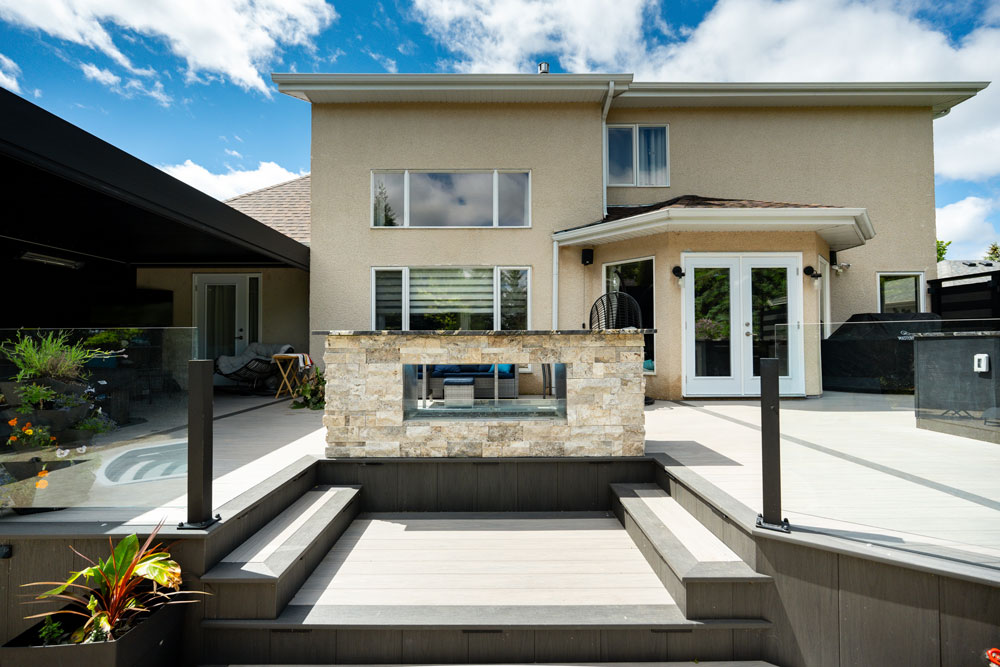
PVC decking is fully synthetic and handles moisture differently than composite through Winnipeg’s freeze-thaw cycles, while composite combines wood fiber with plastic and typically costs less upfront. WOLF Serenity and WOLF Haven are some of the PVC lines Windeck installs, with a higher initial cost in exchange for lower routine maintenance.
PVC vs composite decking sounds like a small detail you can figure out later. It isn’t. The board you pick affects how your deck handles a minus thirty January. It also affects maintenance and what future repairs could cost. Here’s what actually separates these two boards.
Cut One Open and Here’s What You’d See
Composite decking is wood fiber, sawdust, and plastic, pressed and heated together into a plank. That’s why a lot of composite boards still carry a wood grain look and a bit of that wood feel under your bare feet. Brands use different formulations, so the performance of one composite product can be very different from another.
PVC decking skips the wood part completely. It’s plastic through and through, usually a PVC core wrapped in a tougher plastic shell called a cap. WOLF Serenity and WOLF Haven, among others that Windeck installs across Winnipeg, both work this way. No wood fiber inside means there’s no food source for rot, mold, or the bugs that slowly chew through cheaper composite over the years. That difference explains a lot of what separates PVC from composite decking.
Freeze Thaw Cycles Don’t Care Which Brand You Bought
Winnipeg doesn’t do mild winters. We go from plus thirty in July to minus thirty in January, sometimes within the same year, sometimes within the same week in November. Decking material either handles that swing or it doesn’t.
Composite decking can contain wood fibers that are more sensitive to moisture than PVC. How much moisture the board can absorb depends on its construction, including whether the product has a protective cap. Water exposure combined with repeated freezing and thawing can affect the board over time, particularly if moisture reaches exposed areas.
PVC doesn’t contain wood fiber, so it doesn’t absorb moisture in the same way composite decking can. That makes it less susceptible to moisture-related swelling and movement during Winnipeg’s freeze thaw cycles. Older composite products had different formulations than many of the boards available today, so it’s worth looking at the specific product rather than judging all composite decking by older installations.
What You’ll Actually Pay in Winnipeg
Composite decking usually runs cheaper upfront. Depending on the brand and your square footage, you’re often looking at a lower material cost per square foot than PVC. That can matter if you’re working with a tight budget or building a smaller deck where the price difference stays manageable.
PVC costs more per board, sometimes noticeably more. The tradeoff is maintenance. PVC doesn’t need staining or sealing, and its capped surface is designed to handle everyday exposure without the upkeep associated with traditional wood decking. For homeowners planning to stay in their house for years and who want to spend less time maintaining the deck, PVC is the stronger choice.
The easiest way to see real numbers for your own yard instead of guessing is to run your deck size through Windeck’s deck calculator. Plug in your dimensions and you’ll get a straight cost estimate instead of trying to eyeball it from a sample board in a store.
Fading, Staining, and the Stuff Nobody Tells You
PVC decking with a cap resists staining better than composite. Grease from the barbecue or spilled drinks can be easier to clean from PVC because the surface doesn’t absorb them the way lower end composite can. A quick wipe usually does the job.
Fading is where the gap gets interesting. Some composite products can show noticeable color change after installation, particularly with prolonged sun exposure.Good PVC products are designed with UV-resistant surfaces that help limit fading from prolonged sun exposure. The exact performance depends on the product, colour, and manufacturer’s specifications.
Darker composite boards can get uncomfortably warm on bare feet by mid afternoon. Lighter colored PVC tends to run a bit cooler, though color choice matters more here than the material itself. If you’ve got young kids running around barefoot all summer, this is worth thinking through before you pick a shade.
Scratches and dents are the other thing people forget to ask about until it’s too late. Drag a metal patio chair across a PVC board and you might see a mark, since the cap is a hard plastic shell sitting right on the surface. Composite hides small scratches a little better because the wood grain texture breaks up the surface and camouflages minor marks. Neither one survives a dropped barbecue grate without some kind of scar, so a rubber mat under heavy furniture legs saves headaches either way.
Where Composite Still Wins
PVC isn’t the automatic winner for every yard. Composite still wins for a lot of homeowners. If your budget is the main thing driving this decision, composite gets you a wood-look deck for less money upfront. The color range is wider too, since more manufacturers make composite than make premium capped PVC. Some buyers also just prefer the slightly softer, more wood-like feel composite has underfoot compared to the harder surface of PVC.
For a smaller deck, a rental property, or a first home where you’re not planning to stay twenty years, composite can be the smarter money move. A fully capped composite product can offer better moisture protection than an uncapped board, so the specific product matters more than the word “composite” on the label.
Families who want a deck that looks like real cedar without the annual sanding and staining also tend to lean composite. The grain texture reads as wood from a few feet away, and most people walking across it barefoot wouldn’t guess it’s plastic underneath.
The Rest of Your Deck Matters Too
Decking material is only one part of the build. Once you’ve settled on PVC or composite, the rest of the deck design also affects how you’ll use it. Railings and privacy features can make a noticeable difference.
Some Winnipeg lots sit close to the neighbours or right up against the back lane, and a deck privacy screen changes that fast. It turns an exposed backyard into somewhere you’d actually want to sit with a coffee in the morning without feeling like you’re on display. Windeck installs these alongside both PVC and composite decks, and they pair with either material without much fuss.
Our railing gallery shows how different styles pair with each decking material if you want to see the combinations before committing to one.
Which One Actually Fits Your Yard
WOLF PVC decking is built for outdoor exposure, but the bigger decision for a Winnipeg homeowner is how much you’re willing to spend upfront versus how much maintenance you want later. If keeping the initial cost down is your priority, composite is easier on the budget. If you’re planning to stay longer and want less routine maintenance, PVC makes more sense. It’s how long you’re staying in the house. If you’re focused on keeping the initial cost down, composite is easier on the budget. If you’re planning to stay longer and want less routine maintenance, PVC makes more sense.
Your deck size changes that math too, since the price difference between PVC and composite grows with square footage. Windeck can compare the available decking options against your budget and how you plan to use the deck. That’s more useful than judging the material from a sample board alone.
Want to see what PVC or composite would cost for your deck? Use Windeck’s deck calculator for a starting estimate, then contact us to talk through the options.