

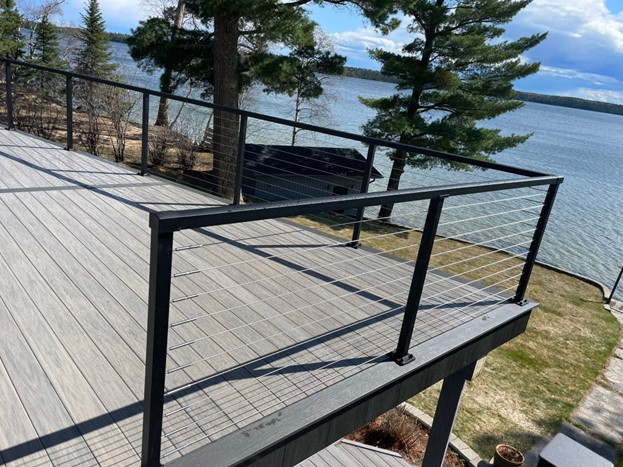
Modern deck railing in Winnipeg can improve a deck’s appearance, safety, privacy, and long-term upkeep. Black aluminum is a practical choice for cold weather, while glass offers an open view and cable railing suits modern designs with more maintenance. Privacy screens can help on smaller lots, while the railing material, deck layout, and installation method all affect the overall cost.
Most Winnipeg decks don’t fail at the boards. They fail at the railing. Gray wood pickets gone loose by year six, a top rail with a wobble you can feel from the patio door, and a buyer at a showing wondering how much maintenance the deck will need next.
Railing is one of the first things people notice, and an outdated railing can make an otherwise modern deck look older. If you’re sketching out new deck designs, settle the railing before you fall for a board color. It shapes the whole look, and it costs more to change later than any other piece of the build.
Black Aluminum Is the Safe Bet
Powder-coated black aluminum is where many Winnipeg homeowners end up, and for good reason. It holds up well through Winnipeg’s cold winters without the rot concerns associated with wood, and it does not need staining. The thin balusters keep sightlines open, so the backyard still looks like a backyard instead of a fence on stilts.
Black also works well against brick, stucco, and many siding colors on newer homes. White can give a railing a more traditional look, while charcoal and bronze offer alternatives for homeowners who want something less common. Black remains a strong choice for a clean, modern deck.
The catch is quality. Lower-quality kits can use thinner walls, and the posts may flex. Ask about post thickness and how the posts anchor to the framing, because a railing that wobbles on install day will wobble worse after ten freeze-thaw cycles.
Glass Panels Look Expensive Because They Are
Glass is the upgrade people photograph. Tempered glass panels with a slim top rail keep the view open and can reduce some wind exposure, which can be useful on an exposed deck.
Glass usually costs more than aluminum and needs regular cleaning to keep the panels looking clear. Winnipeg dust, spring residue, and everyday outdoor grime are also more noticeable on clear glass. If you hate wiping things down, pick something else. Browse a few more deck ideas and you’ll notice the best glass rails sit on decks with simple, clean boards and nothing busy competing for attention.
Cable Rail Looks Great but Needs More Upkeep
Cable rail shows up on plenty of modern deck designs, and it does look sharp. Stainless steel cables run horizontally between the posts, keeping the view open without the heavier look of traditional pickets.
Cable systems need proper tensioning and periodic checks, and seasonal temperature changes can make that maintenance more noticeable. Horizontal cable runs can also create a more climbable surface for young children than vertical balusters, so families with toddlers should factor that into the railing choice.
Installation takes more care than a standard aluminum railing system, and that can increase the overall cost. Cable rail makes sense when keeping the view open is a top priority and you’re comfortable with the extra maintenance. For a simpler setup, black aluminum gives you a similar clean look with less upkeep.
Privacy Changes What You Choose
Winnipeg lots are tight. Your neighbour’s second-floor window probably looks straight onto your deck, and an open railing of any kind does nothing about that. Add a deck privacy screen on the side facing the neighbour and keep the rest of the railing open.
Louvered aluminum or composite slat screens look better than lattice and never need paint. Keep them to one or two sides. Wrap all four and the deck feels like a box, which defeats the point of paying for glass.
Railing Costs Add Up Fast
Don’t price the railing last. Most people lock in the decking, then discover the railing budget is whatever happens to be left. Flip that order.
Railing is priced by the linear foot, so a long perimeter or a wraparound turns a nice idea into a big number quickly. A 12 by 16 deck with one set of stairs needs far less rail than a 20 by 20 open to the yard on three sides. Stairs add railing too, and that’s the part people forget.
Run your dimensions through a deck calculator before you commit to glass anywhere. A common move is glass on the yard-facing side and aluminum on the rest. It looks intentional and it saves real money.
Railing Choices That Need More Thought
Pressure-treated wood railing may cost less at the start, but it usually asks for more maintenance over the years. Winnipeg’s sun, moisture, and seasonal temperature changes can leave the boards cracked, faded, or loose. Regular staining and repairs can also take more time than homeowners expect.
Vinyl railing can work in some settings, but it may not fit the look of a modern deck as well as aluminum. Some products can discolor over time, while very cold temperatures may affect the flexibility of certain materials. White vinyl also gives the deck a more traditional appearance, which can feel out of place beside modern composite decking and dark-colored railing.
Basic retail railing kits can work well for a small landing or secondary entrance. For a larger main deck, a railing system designed around the deck layout gives you better control over post placement, stair sections, and how the railing connects to the framing.
Match the Railing to the Boards
Railing and decking should be read as one decision. Warm brown composite with black rails gives the contrast buyers like. Light gray boards with white rails look like 2009.
Composite also stays put through winter in a way wood doesn’t. When you’re comparing Trex decking options in Winnipeg, get the railing quoted at the same time. Posts anchored into the framing hold up far better than posts screwed into the surface, and that detail changes the price.
Seeing real builds helps more than catalog photos. Look through Winnipeg deck railing projects and watch how post spacing and top rail profiles change the feel from one deck to the next.
Look closely at the top rail. A flat cap gives you somewhere to set a drink, and people notice that in person. Round rails look more like an apartment balcony.
Photos only go so far. The height of your deck off the ground decides what’s allowed and what makes sense, and a site visit settles it faster than any amount of guessing. Contact us and we’ll look at your yard, your measurements, and your budget, then tell you straight which railing is worth the money.
What Buyers Actually Notice
Buyers notice the condition and appearance of a deck before they start thinking about individual railing materials. Clean black rails, straight posts, and a well-kept deck make the whole outdoor area look cared for. A railing that is loose, faded, or visibly worn can have the opposite effect, even when the decking itself is in good shape.
Listing photos matter more than people think. Glass and aluminum photograph well, and wood railing in rough shape photographs badly. Your deck is often one of the first outdoor shots in the listing, so it’s working for you before anyone sets foot in the yard.
Permits matter too. Check with the City of Winnipeg before anything gets built. Unpermitted work becomes a problem at sale time, and railing height and spacing are exactly what inspectors look at.
Lighting is a relatively low-cost finish that can add a lot to the deck after dark. Low-voltage post cap lights and small stair lights can add useful visibility without changing the overall look of the railing. A deck lit at dusk can feel more inviting and comfortable, especially when the lights are placed around stairs and seating areas. Put them on a timer so they come on without you thinking about it.
FAQs
1. What is the best deck railing for Winnipeg winters?
Powder-coated aluminum is a practical choice for Winnipeg decks because it does not rot like wood and requires less routine maintenance. It also works well with modern composite decking and can handle the seasonal changes common in Manitoba.
2. How much does deck railing cost in Winnipeg?
Deck railing costs vary based on the material, total linear footage, stairs, post layout, and installation requirements. Aluminum generally costs less than glass, while cable and glass systems can require more installation work. Getting the railing priced with the deck can give you a more accurate project budget.
3. Is glass railing a good choice for a Winnipeg deck?
Glass railing can be a good choice when keeping an open view is a priority. Tempered glass gives the deck a clean appearance and can reduce some wind exposure, but it costs more than many aluminum systems and requires regular cleaning to keep the panels clear.
4. What type of deck railing provides the most privacy in Winnipeg?
A standard open railing provides little privacy. Homeowners who want more separation from neighbouring properties can combine their railing with a deck privacy screen. Slatted or louvered panels can add privacy while keeping the deck from feeling completely enclosed.
5. Does new deck railing add value to a Winnipeg home?
A new railing can improve the appearance and condition of a deck, which can help create a better impression when a home is listed for sale. Clean, well-maintained railing can make the outdoor area look more cared for, although the exact effect on home value depends on the property and the overall quality of the deck.