
Deck lighting isn’t just decorative. It prevents accidents. Unlit stairs cause falls. Dark edges lead to missteps. Shadowy corners hide obstacles.
But bad lighting creates its own problems. Overheated fixtures start fires. Faulty wiring causes shocks. Improperly installed lights fail during storms. In Winnipeg, where decks get heavy use during short summer evenings and weather can be harsh, safe lighting matters even more.
At Windeck Ltd., we install deck lighting that meets code, handles Manitoba weather and actually keeps people safe. Not just bright. Safe.
Electrical Safety Basics for Deck Lighting
Essential requirements:
- GFCI protection on all outdoor circuits
- Weatherproof boxes and covers
- Proper wire gauge for the load
- Buried or protected wiring runs
- Licensed electrician for installation
GFCI outlets shut off power if they detect a ground fault. This prevents shocks and electrocution. Every outdoor circuit needs this protection.
Weatherproof boxes keep moisture out of connections. Standard indoor boxes fail outside. Water gets in. Corrosion happens. Failures occur.
Wire gauge matters. Too-thin wire for the load creates heat and fire risk. Follow code requirements for wire sizing based on circuit length and load.
The Canadian Electrical Code requires GFCI protection for all outdoor receptacles and lighting circuits. Outdoor electrical installations must use weatherproof enclosures rated for wet locations. Wire sizing must account for voltage drop over distance and total amperage load. All outdoor electrical work requires permits and inspection in most Canadian municipalities including Winnipeg. Sources: Canadian Electrical Code, Electrical Safety Authority, City of Winnipeg Electrical Permits.
Stair and Step Lighting Requirements
Stairs are the highest-risk area on any deck. People fall on dark stairs. It happens constantly.
Safe stair lighting:
- Light every step or every other step minimum
- Fixtures recessed or protected from foot traffic
- Even, consistent illumination without harsh shadows
- No glare that blinds users going up or down
- Fixtures secured so they don’t come loose
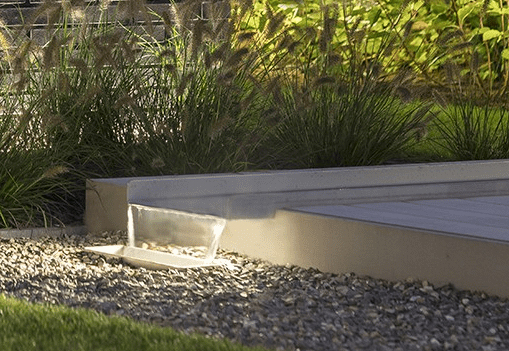
Recessed step lights work well. They’re flush with risers or treads so nothing sticks out to trip on.
Post lights at top and bottom of stairs help but aren’t enough on their own. You need light on the stairs themselves. Shadows create depth perception problems. Light stairs evenly so users can see where to step.
Fixture Placement and Heat Management
Lighting fixtures generate heat. Poor placement causes fires.
Safe placement rules:
- Keep fixtures away from combustible materials
- Don’t install lights directly under wood railings unless rated for it
- Ensure adequate ventilation around fixtures
- Use fixtures rated for the installation location
- Follow manufacturer clearance requirements
LED fixtures run cooler than incandescent or halogen.Enclosed fixtures trap heat so proper heat dissipation is still required.. Make sure they’re rated for enclosed installation if that’s how you’re using them.
If you have halogen Post cap lights that are sitting on wood posts. Use fixtures designed with proper heat shielding.
At Windeck Ltd., we use fixtures appropriate for each location.
Weatherproofing and Moisture Protection
Water and electricity don’t mix. Outdoor lighting faces rain, snow, ice and humidity. Everything needs proper protection.
Weatherproofing essentials:
- Fixtures rated for wet locations
- Sealed connections with waterproof wire nuts or heat shrink
- Weatherproof junction boxes with gaskets
- Proper wire entry points that shed water
- Regular inspection for damage or deterioration
Wet-rated fixtures handle direct water exposure. Damp-rated fixtures only handle moisture. Know which you need and where.
Connections are where most water problems start. A loose wire nut lets moisture in. Corrosion begins. Eventually the circuit fails or causes a short. Silicone-filled wire nuts or heat shrink tubing seal connections properly. Regular electrical tape isn’t enough outdoors.
In Winnipeg’s climate with freeze-thaw cycles, moisture gets into everything. Proper sealing from the start prevents problems.
Wire Management and Protection
Exposed wiring on a deck is a safety hazard and code violation.
Wires need protection from damage, weather and accidental contact.
Safe wire installation:
- Bury wire in conduit underground
- Run wire through deck framing where hidden
- Use conduit on exposed runs
- Secure wiring so it doesn’t hang loose
- Keep wire away from sharp edges that can cut insulation
Buried wire needs to be at proper depth per code. Usually at least 18 inches for direct burial cable or 6 inches if in conduit. Conduit protects wire from damage. PVC conduit works for most deck lighting. Metal conduit may be required in some situations.
Wire run through deck joists should be secured and protected from abrasion. Drilling through framing members has rules about hole size and location to maintain structural integrity.
Loose wiring gets stepped on, snagged or damaged. Secure everything properly.
At Windeck Ltd., we run all deck lighting wire to code with proper protection. No exposed wire. No shortcuts.
Circuit Load and Overload Prevention
Every circuit has limits. Overload a circuit and you trip breakers at best, start fires at worst.
Safe loading:
- Calculate total wattage of all fixtures
- Don’t exceed 80% of circuit capacity
- Use adequately sized wire for the load
- Don’t daisy-chain too many fixtures
- Consider dedicated circuits for deck lighting
A 15-amp circuit at 120V can handle 1800 watts. But you should only load it to about 1440 watts for safety. LED lighting uses far less power than older bulbs. But if you’re running dozens of fixtures, calculate the load.
Transformers for low-voltage systems have wattage limits. Exceed them and the transformer overheats or fails. We size circuits and transformers properly at Windeck Ltd. based on total lighting load plus a safety margin.
Ground Fault and Arc Fault Protection
GFCI protection is required. Arc fault protection may be required depending on when your deck was built.
GFCI (Ground Fault Circuit Interrupter): Detects current leakage and shuts off power instantly. Prevents electrocution from ground faults. Required for all outdoor circuits.
AFCI (Arc Fault Circuit Interrupter): Detects dangerous arcing in wiring and shuts off power. May be required for new deck lighting installations depending on local code adoption.
Both types of protection save lives. Don’t skip them to save money.
GFCI outlets should be tested monthly by pressing the test button. Replace them if they don’t trip or won’t reset.
At Windeck Ltd., all outdoor lighting gets GFCI protection minimum. We follow current code requirements for arc fault protection too.
Permit and Inspection Requirements
Deck lighting electrical work requires permits in Winnipeg.
What needs permits:
- Any new electrical circuits
- Low-voltage systems over a certain wattage
- Line-voltage installations
- Work done by anyone other than the homeowner in some cases
Permits ensure work meets code. Inspections catch problems before they become hazards.
Unpermitted electrical work creates liability. Insurance may not cover damage from unpermitted installations. Buyers can walk away from sales over unpermitted work.
Licensed electricians pull permits as part of their service. DIY work may require homeowner permits.
At Windeck Ltd., we handle all permits for electrical work on deck projects. It’s part of our process, not an optional extra.
Low-Voltage vs Line-Voltage Systems
Low-voltage systems (12V or 24V):
- Safer due to lower voltage
- Use a transformer to step down from 120V
- Less shock risk
- Easier DIY installation in some cases
- Still requires proper wiring and connections
Line-voltage systems (120V):
- Direct household voltage
- Brighter light output possible
- Requires licensed electrician
- Higher shock and fire risk if done wrong
- More code requirements
Low-voltage is generally safer for homeowner use. But it still needs proper installation. Bad connections cause fires even at low voltage.
Line-voltage delivers more power but requires professional installation and stricter code compliance.
At Windeck Ltd., we install both depending on the project. Low-voltage works for most deck lighting. Line-voltage makes sense for certain fixtures or when integrating with home electrical systems.
Contact Us about Installing Deck Lighting in Your Backyard
At Windeck Ltd., we install deck lighting across Winnipeg that meets code, handles Manitoba weather and keeps people safe. We use licensed electricians, proper materials and proven installation methods.
Ready to light your deck safely? Let’s talk about what makes sense for your space.