
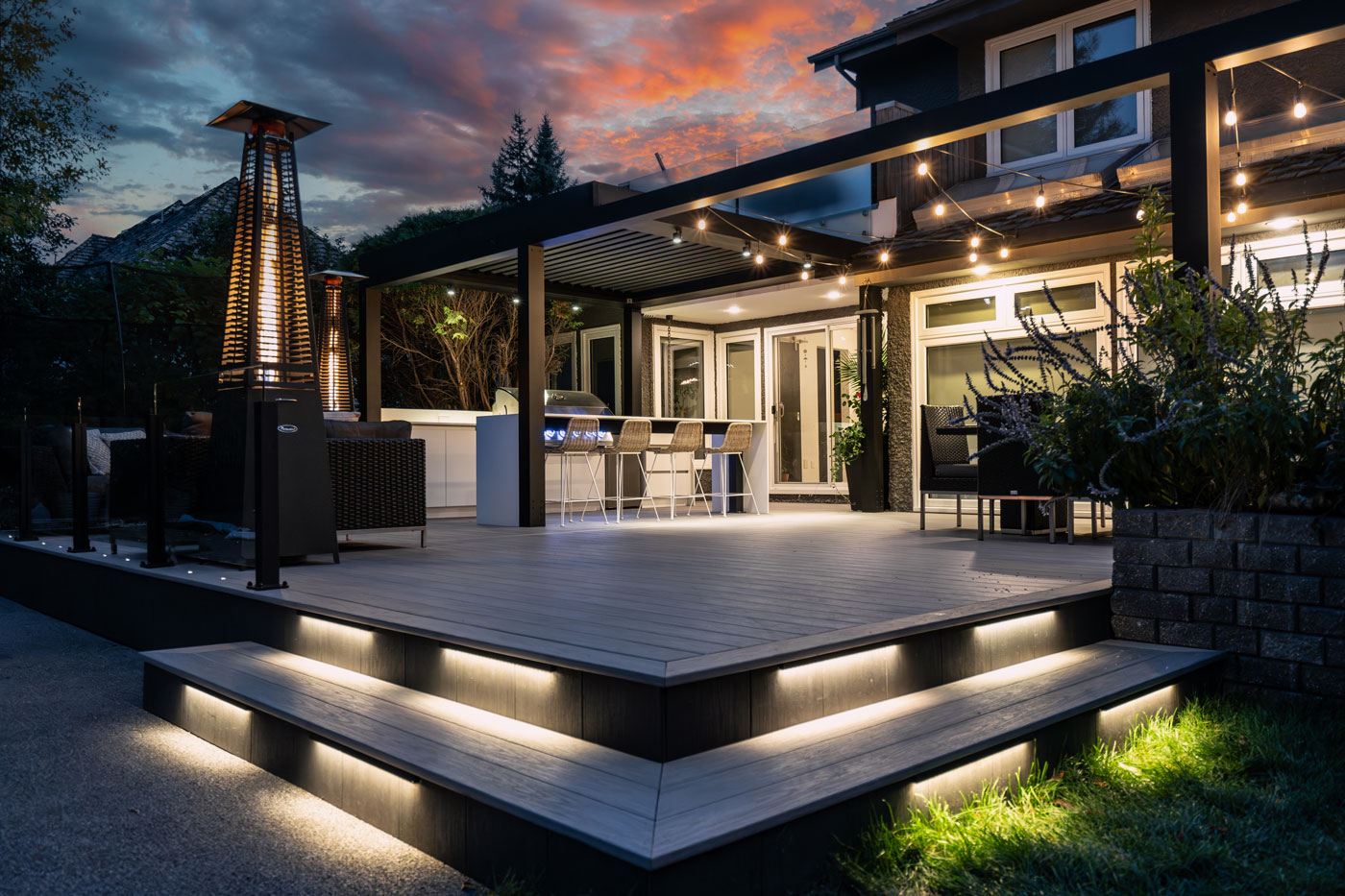
Outdoor lighting in can make a deck safer and more comfortable after dark. Stair lights improve visibility, post cap lights define the deck edges, and pathway lighting helps guide people through the yard. For Winnipeg’s changing weather, choose outdoor-rated fixtures and use a mix of wired and solar lighting based on where dependable illumination matters most.
Walking onto a dark deck after dinner can turn an ordinary step into an unpleasant surprise. Good outdoor lighting homeowners actually use is not about fancy fixtures. It is about seeing where you are going while keeping the deck looking good at night.
Winnipeg summers are short. Everyone knows this. The second the snow clears, people want to be outside, grilling, or sitting with a coffee at 9pm because the sun still refuses to set. A deck without proper lighting becomes much less useful once the sun goes down. People head inside because the stairs, furniture, and edges of the deck disappear into the dark.
If you’re planning a new deck, Windeck is a deck builder in Winnipeg that can help work lighting into the layout from the start. The focus here is on practical lighting for Winnipeg backyards that have to deal with actual weather and realistic budgets.
Start With the Stairs
Stairs are where accidents happen. A flat deck surface is forgiving. You can see the edges even in low light because your eyes adjust. Steps are different. One step blends into the next, especially on a cloudy night or after a few drinks at a barbecue. Small LED strip lights tucked under the stair nosing can improve visibility without looking like an airport runway. They run on low voltage, and outdoor-rated fixtures are available for cold climates. Check the manufacturer’s temperature rating before choosing a fixture for year-round use in Winnipeg.
Some people go with individual puck lights screwed into the riser of each step. Others prefer a single continuous strip. Either works. Pick whichever matches how much maintenance you want to do, because individual pucks mean more wiring connections and more spots where something can fail. Lighting can also be planned alongside your deck design so stair placement, seating areas, railings, and fixtures all work together.
Post Cap Lights Are Underrated
Deck railing posts already exist. You are not adding a new structure, just capping something that is already there with a light instead of a plain wood or vinyl cap. Solar post cap lights are the easy option. No wiring, no electrician, just pop them on top and they charge during the day.
The catch with solar in Winnipeg is winter. Shorter days and reduced sunlight can limit charging as fall approaches. If you want dependable light later into the season, wired post caps connected to a low voltage transformer are the better choice. Solar post caps can work well during Winnipeg’s brighter months, but their performance can become less consistent as the days get shorter. The railing itself is part of the lighting plan too. Windeck’s deck railing options include different materials and styles that can affect where post lights, strips, and other fixtures can be installed.
String Lights Still Work, When Done Right
Everyone has seen string lights. They are not a new idea. But there is a right way and a wrong way to hang them. The wrong way is stapling them straight along the railing where they compete with the stair and post lighting and just add clutter. The right way is overhead, strung between posts or from the house to a pole, creating a canopy effect above the seating area. It lights the seating area and draws your eye upward, making the deck feel bigger at night than it does during the day.
Choose string lights specifically rated for outdoor use, and check the manufacturer’s IP rating before installing them in an exposed area. A lot of cheap string lights sold for indoor party decor will not survive a Winnipeg rainstorm, let alone sitting outside from May through September. If privacy is also part of your deck plans, a deck privacy screen can give you another surface to work around when planning lighting without filling the entire railing with fixtures.
Motion Sensor Lights for the Practical Side
A motion sensor light near the deck entrance or by the stairs handles the practical side of outdoor deck lighting. You come home late with your hands full, and the light switches on before you even reach for the switch. No fumbling in the dark, no wasted electricity running a light all night when nobody is out there.
These pair well with the decorative stuff. Run your string lights and post caps on a timer for ambience and let the motion sensor handle security and safety on its own separate circuit. That way your pretty lights are not on all night burning power for no reason, but the safety light is always ready. Windeck’s outdoor lighting options include lighting for stairs, posts, railings, pathways, and other areas around a deck.
Fire Pit and Seating Area Lighting
If your deck has a fire pit or a lounge corner, that area deserves its own lighting plan instead of just borrowing spill light from everywhere else. Low, warm lighting works best around seating areas. Think path lights or small lantern style fixtures placed at ankle height rather than anything bright and overhead. Bright light kills the mood around a fire pit and makes the fire itself look dimmer by comparison. Warm white LEDs, somewhere around 2700K on the color temperature scale, match the tone of the firelight instead of fighting it.
A string of lower wattage bulbs looped loosely around a pergola beam above the seating area adds just enough glow to see your drink without flooding the whole area.
Pathway Lighting Off the Deck
The path leading away from the deck needs attention too. A dark walkway to the yard or side gate can be just as difficult to see as an unlit set of stairs.
Small stake lights along the walkway help define the edges and make it easier to see where the path ends. They are also one of the simpler outdoor lighting options to install because many models can be pushed into the ground without tools.
Keep the spacing consistent rather than lining them up too closely. Around six to eight feet apart can work well for many walkways, but the right distance depends on the brightness and spread of the fixture. Lights packed too closely together can make the path look cluttered, while wider gaps can leave noticeable dark spots.
Dealing With Winnipeg Winters
Here is the part a lot of lighting guides skip. What happens to all this in January?
Outdoor LED fixtures can be used year-round when their specifications allow for the temperatures and conditions they will face. For Winnipeg installations, check the manufacturer’s temperature range and outdoor-use rating before leaving fixtures in place through winter. The bigger risk is snow load and ice buildup on wiring and connections, plus repeated freezing and thawing, which can put additional stress on poorly suited housings and connections.
Look for fixtures with an outdoor-rated enclosure and a housing designed to handle exposure to moisture and cold. The manufacturer’s specifications should confirm whether the fixture is suitable for year-round outdoor use.
For string lights and other removable fixtures, taking them down before heavy winter weather can reduce exposure to snow, ice, and wind and help prevent unnecessary wear. Mounted post cap and stair lights can remain in place year-round when the fixture and wiring are rated for the expected outdoor conditions, since they are built into the structure rather than hanging loose where wind and ice can get at them.
Mixing Low Voltage and Solar
A smart setup uses both. Use low voltage wired lighting for fixtures that need to be reliable late into the season, such as stair and entrance lights. Solar works better for accent lighting where a little inconsistency isn’t a problem, such as extra post caps or a decorative lantern by the garden.
This split keeps installation simpler because you are not running wire to every single fixture, but the spots that matter for safety still have a dependable power source that does not depend on how sunny last Tuesday was.
Getting the Brightness Right
More light is not automatically better. A deck lit up like a stage looks harsh and washes out the whole yard around it. The goal is layered light. Bright enough at the stairs and entrance to see clearly, softer everywhere else so the deck still feels comfortable at night instead of looking like a parking lot.
Dimmable transformers on low voltage systems let you adjust the brightness through the season. You can use higher settings in early spring when the sun sets earlier, then lower them through the long June and July evenings when you barely need much light until 10pm.
Good lighting should also work with the rest of your deck ideas, including the layout, railing, seating areas, and any overhead structure.
Planning a new deck or updating an existing one? Talk to Windeck about deck design, railing, and outdoor lighting options that fit your Winnipeg backyard. You can also use the deck calculator to start planning your project.
What You’ll Actually Pay in Winnipeg
Composite decking usually runs cheaper upfront. Depending on the brand and your square footage, you’re often looking at a lower material cost per square foot than PVC. That can matter if you’re working with a tight budget or building a smaller deck where the price difference stays manageable.
PVC costs more per board, sometimes noticeably more. The tradeoff is maintenance. PVC doesn’t need staining or sealing, and its capped surface is designed to handle everyday exposure without the upkeep associated with traditional wood decking. For homeowners planning to stay in their house for years and who want to spend less time maintaining the deck, PVC is the stronger choice.
The easiest way to see real numbers for your own yard instead of guessing is to run your deck size through Windeck’s deck calculator. Plug in your dimensions and you’ll get a straight cost estimate instead of trying to eyeball it from a sample board in a store.
Fading, Staining, and the Stuff Nobody Tells You
PVC decking with a cap resists staining better than composite. Grease from the barbecue or spilled drinks can be easier to clean from PVC because the surface doesn’t absorb them the way lower end composite can. A quick wipe usually does the job.
Fading is where the gap gets interesting. Some composite products can show noticeable color change after installation, particularly with prolonged sun exposure.Good PVC products are designed with UV-resistant surfaces that help limit fading from prolonged sun exposure. The exact performance depends on the product, colour, and manufacturer’s specifications.
Darker composite boards can get uncomfortably warm on bare feet by mid afternoon. Lighter colored PVC tends to run a bit cooler, though color choice matters more here than the material itself. If you’ve got young kids running around barefoot all summer, this is worth thinking through before you pick a shade.
Scratches and dents are the other thing people forget to ask about until it’s too late. Drag a metal patio chair across a PVC board and you might see a mark, since the cap is a hard plastic shell sitting right on the surface. Composite hides small scratches a little better because the wood grain texture breaks up the surface and camouflages minor marks. Neither one survives a dropped barbecue grate without some kind of scar, so a rubber mat under heavy furniture legs saves headaches either way.
Where Composite Still Wins
PVC isn’t the automatic winner for every yard. Composite still wins for a lot of homeowners. If your budget is the main thing driving this decision, composite gets you a wood-look deck for less money upfront. The color range is wider too, since more manufacturers make composite than make premium capped PVC. Some buyers also just prefer the slightly softer, more wood-like feel composite has underfoot compared to the harder surface of PVC.
For a smaller deck, a rental property, or a first home where you’re not planning to stay twenty years, composite can be the smarter money move. A fully capped composite product can offer better moisture protection than an uncapped board, so the specific product matters more than the word “composite” on the label.
Families who want a deck that looks like real cedar without the annual sanding and staining also tend to lean composite. The grain texture reads as wood from a few feet away, and most people walking across it barefoot wouldn’t guess it’s plastic underneath.
The Rest of Your Deck Matters Too
Decking material is only one part of the build. Once you’ve settled on PVC or composite, the rest of the deck design also affects how you’ll use it. Railings and privacy features can make a noticeable difference.
Some Winnipeg lots sit close to the neighbours or right up against the back lane, and a deck privacy screen changes that fast. It turns an exposed backyard into somewhere you’d actually want to sit with a coffee in the morning without feeling like you’re on display. Windeck installs these alongside both PVC and composite decks, and they pair with either material without much fuss.
Our railing gallery shows how different styles pair with each decking material if you want to see the combinations before committing to one.
Which One Actually Fits Your Yard
WOLF PVC decking is built for outdoor exposure, but the bigger decision for a Winnipeg homeowner is how much you’re willing to spend upfront versus how much maintenance you want later. If keeping the initial cost down is your priority, composite is easier on the budget. If you’re planning to stay longer and want less routine maintenance, PVC makes more sense. It’s how long you’re staying in the house. If you’re focused on keeping the initial cost down, composite is easier on the budget. If you’re planning to stay longer and want less routine maintenance, PVC makes more sense.
Your deck size changes that math too, since the price difference between PVC and composite grows with square footage. Windeck can compare the available decking options against your budget and how you plan to use the deck. That’s more useful than judging the material from a sample board alone.
Want to see what PVC or composite would cost for your deck? Use Windeck’s deck calculator for a starting estimate, then contact us to talk through the options.